Implant-Supported
Overdentures.
A denture that stays put — anchored to implants, not your gums.
For patients seeking a more stable alternative to a conventional denture — without the full investment of a fixed bridge — an implant-supported overdenture is an evidence-based middle-ground option. Typically two implants are placed in the lower jaw, and your denture clips securely onto them with hidden attachments.
Two implants. A secure click.
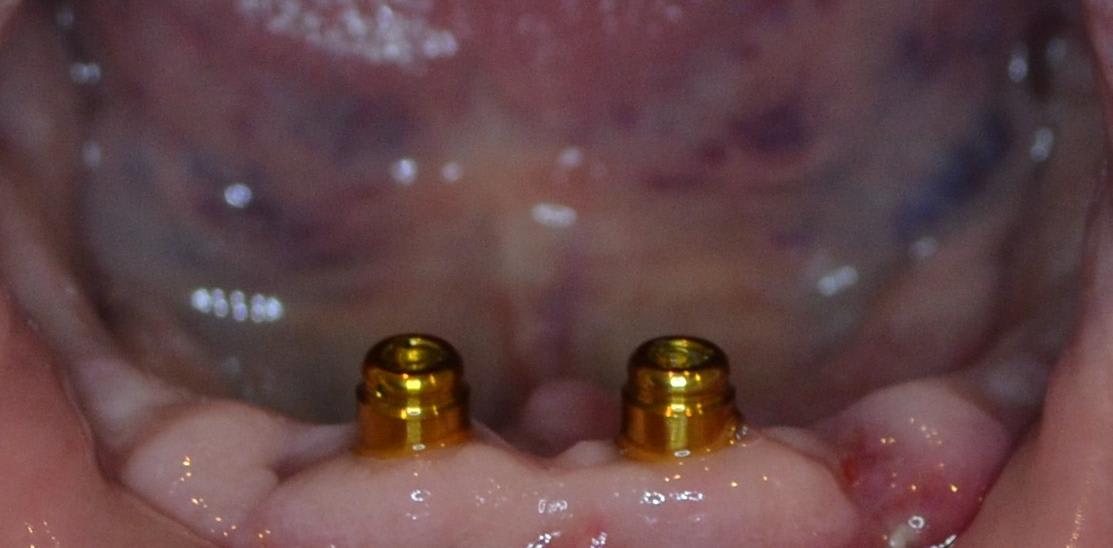
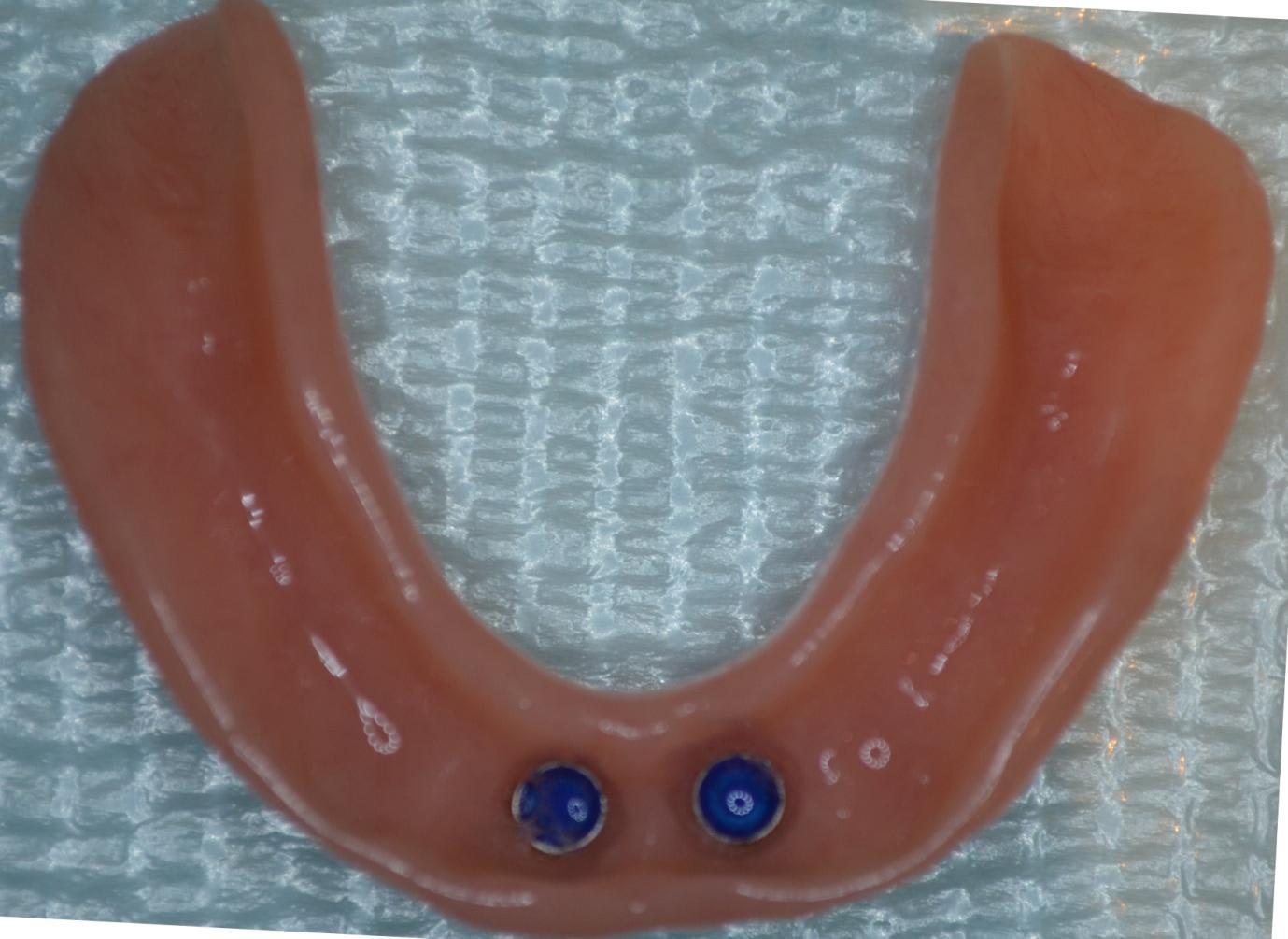
Placing two implants in the lower jaw helps stabilise the denture so it doesn't lift away from the gum. Hidden attachments inside the denture lock onto the attachments on the implants, creating a friction fit that holds the denture in place.
The benefits of an overdenture.
Greater stability
Anchored to implants rather than resting on the gums, the denture moves far less than a conventional one — which can make eating and speaking more comfortable.
Simple to clean
Because it stays removable, day-to-day cleaning is straightforward: take it out, clean the denture, and clean your gums and the attachments.
A lower-cost entry to implants
A typical two-implant case is approximately $12,000 — a lower-cost entry point into implant treatment than a full fixed bridge.
A step you can build on
Some patients choose an overdenture first and later move to a fully fixed option such as All-on-4. It can be a sensible interim step.
Failing dentition, rehabilitated.
A patient treated at Leichhardt Dental Centre. A failing lower dentition was rehabilitated with a two-implant–supported overdenture — restoring chewing function and the appearance of a full smile.
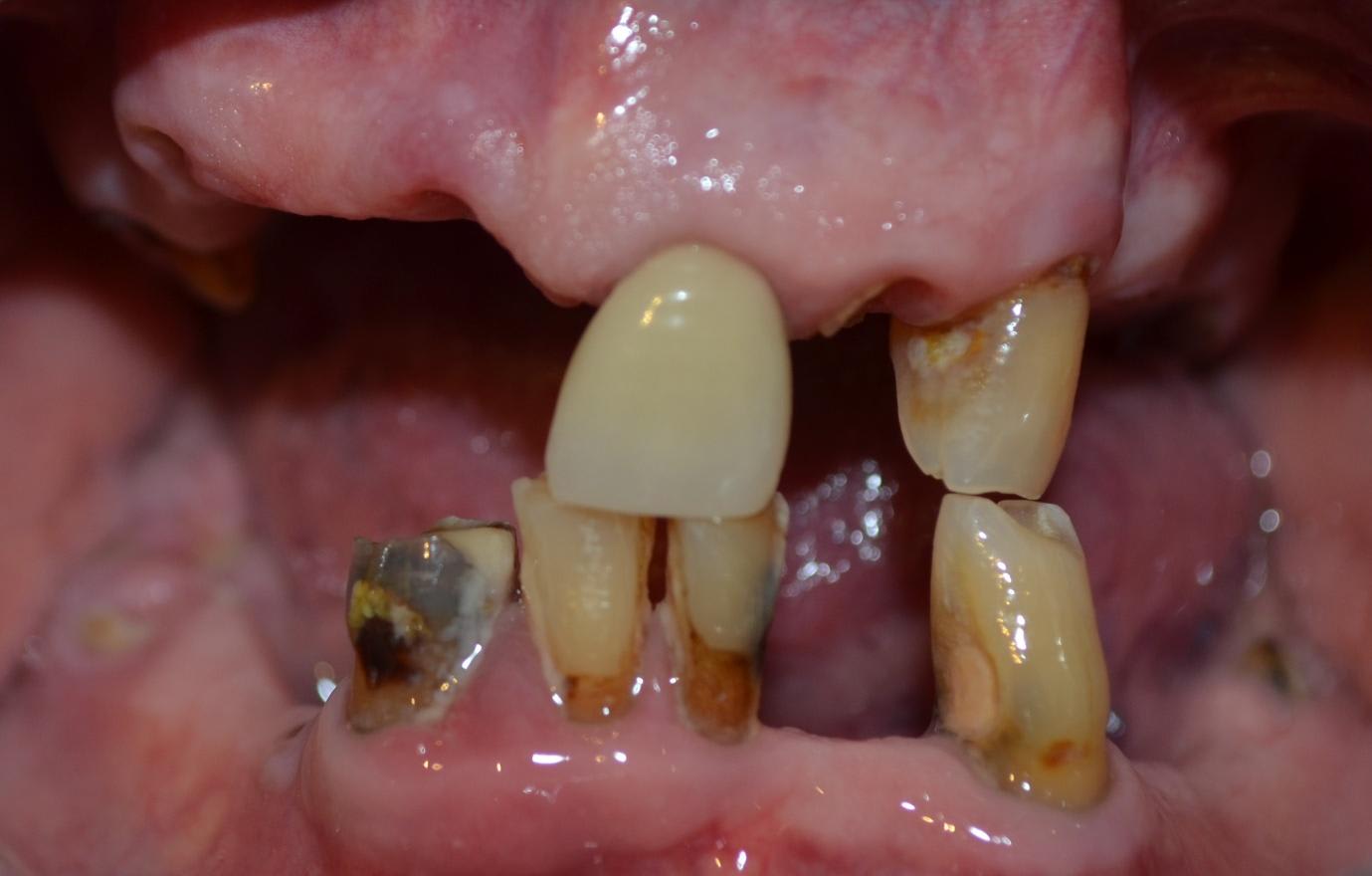
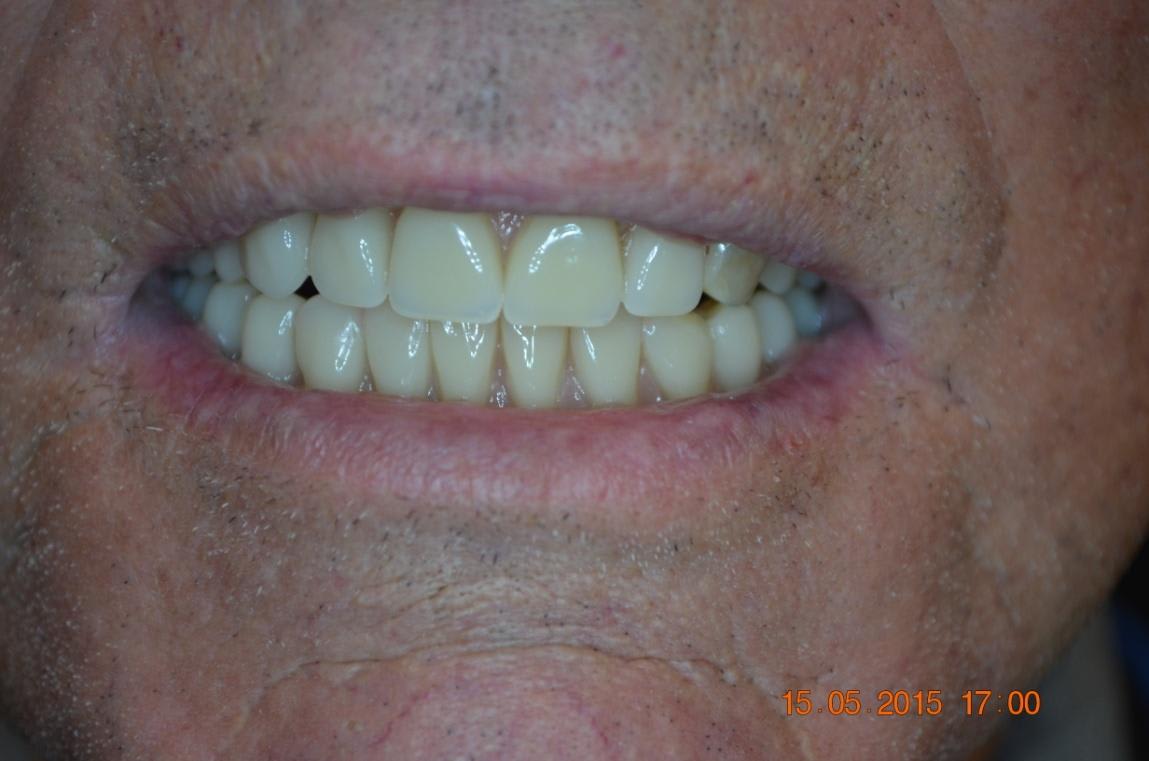
Individual results vary — this is not a guarantee of outcome. The images are real, unaltered clinical photographs of one patient treated at this practice, published with the patient's consent. Treatment suitability and the likely result for your own situation can only be determined at a consultation. It is wise to seek a second opinion before any significant treatment.
Transparent, up front.
We know cost is an important part of the decision. A typical case — two implants, the custom denture, and all the necessary clinical work — is approximately the figure shown. Your final, itemised quote is confirmed in writing after a consultation and 3D scan, tailored to your situation.
Typical two-implant case
~$12,000 AUD
Approximate, all-inclusive of a standard case.
- Two implants placed in the lower jaw
- Your custom overdenture with snap-on attachments
- All necessary clinical work for a standard case
Price is indicative and in Australian dollars. Individual cases vary; your final fee is confirmed in a written treatment plan after clinical assessment. Suitability for implant treatment depends on your individual clinical situation — not all patients are candidates.
How your overdenture is delivered.
- Step 01
Consultation & 3D scan
Dr. Nick reviews your medical and dental history and takes a low-dose 3D CT scan to assess bone volume and plan implant position.
- Step 02
Implant placement
Two implants are typically placed in the lower jaw under local anaesthetic. You go home the same day.
- Step 03
Healing (3–6 months)
The titanium implants fuse with the jawbone (osseointegration). A temporary denture can be worn during this phase.
- Step 04
Denture fitting
Once healed, your custom overdenture is fitted with internal attachments that "snap" onto the implants. We adjust until it feels comfortable and stable.
- Step 05
Ongoing maintenance
The small internal clips that provide the "snap" wear naturally and are replaced every few years at a routine appointment.
Risks & considerations
Implant-supported overdentures use the same implant surgery as other implant treatments, with risks including infection, bleeding, swelling, transient nerve sensitivity, and — rarely — implant failure. Because the overdenture remains a removable device, it must be taken out daily for cleaning and should not be worn while sleeping. The small internal attachments that provide the "snap" will wear over time and typically need a quick professional replacement every few years.
All dental procedures carry potential risks and benefits. Individual results vary. A consultation with a registered dental practitioner is required to determine whether a treatment is suitable for you.
Common questions about overdentures.
See if an overdenture is right for you.
Book a consultation with Dr. Nick. We'll assess your situation, talk through your options honestly, and give you a clear written plan — no pressure to proceed.
Shop 4/39-45 Norton Street, Leichhardt NSW 2040 · 02 9568 3593
Back to Dental Implants